Biology has become a data science. A single sequencing run can produce billions of reads, and drug discovery teams screen millions of molecules on computers before testing a handful in the lab. Bioinformatics is the field that turns this data into answers, and India is investing heavily in it.
This guide explains why bioinformatics matters in India today, the two main career tracks, the roles and skills involved, and how to start building a portfolio.
Why bioinformatics matters in India now
- Genome India Project: launched in 2020 by the Department of Biotechnology to map India's genetic diversity. Whole-genome data from 10,000 individuals across 99 population groups was released in January 2025.
- Indian Biological Data Centre (IBDC): India's first national repository for life science data, which hosts the Genome India dataset and provides controlled access for researchers.
- Precision medicine and diagnostics: genetic testing, cancer genomics and infectious disease surveillance all depend on people who can analyse sequencing data.
- Drug discovery: pharmaceutical and biotech R&D uses computational methods such as molecular docking and simulations to prioritise drug candidates.
Two career tracks: genomics and computational biology
Genomics and NGS data analysis
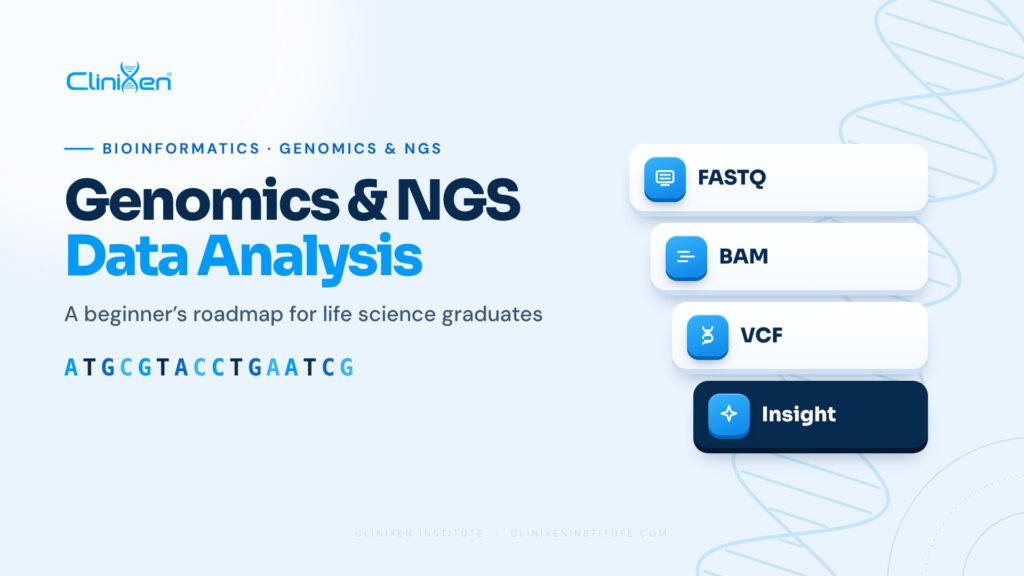
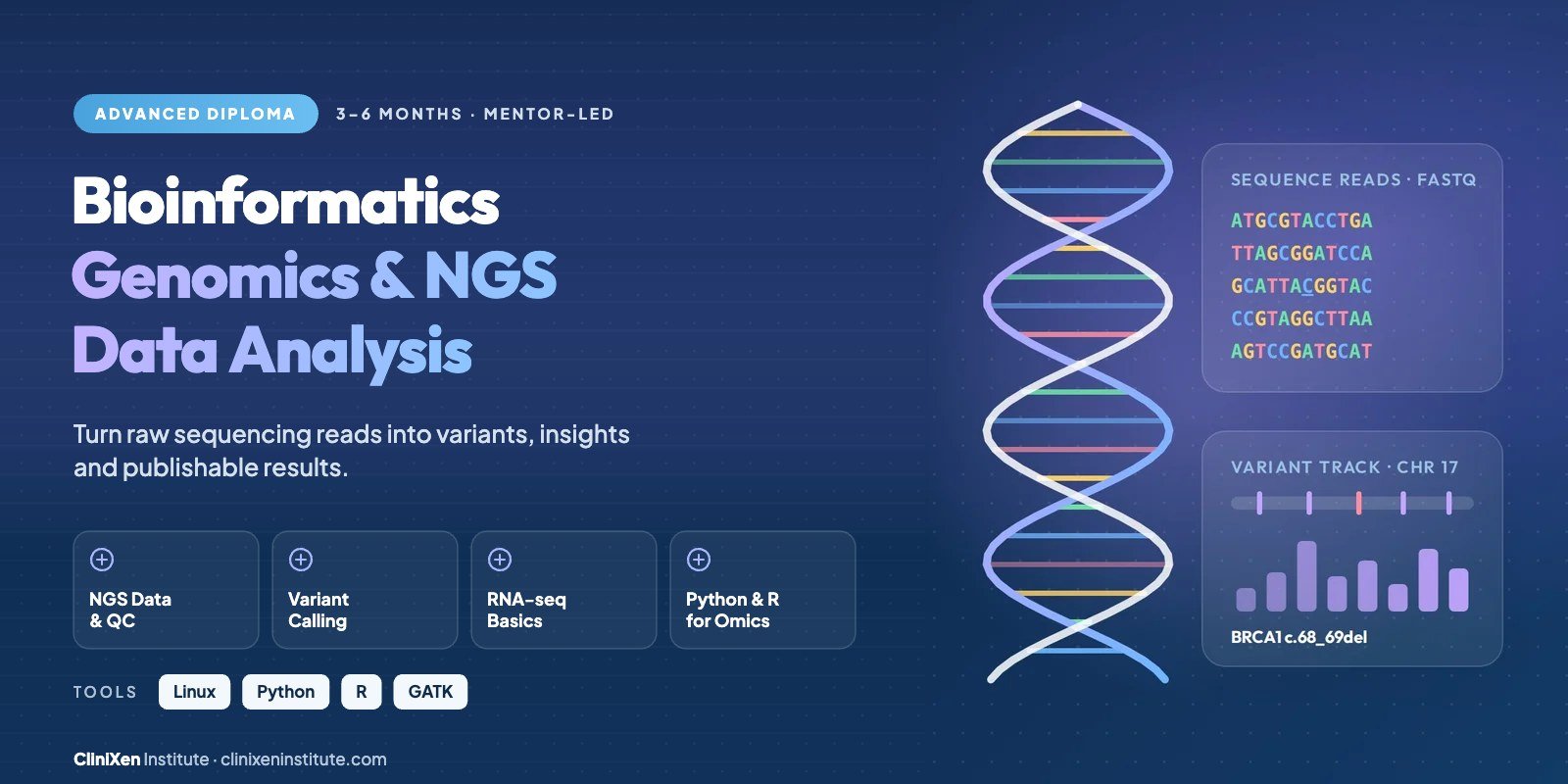
Focuses on DNA and RNA sequencing data: quality control, alignment to a reference genome, variant calling and annotation, and gene expression analysis with RNA-seq. If you are curious how sequencing technologies compare, read NGS vs Sanger Sequencing: A Complete 2026 Comparison.
Computational biology and drug design
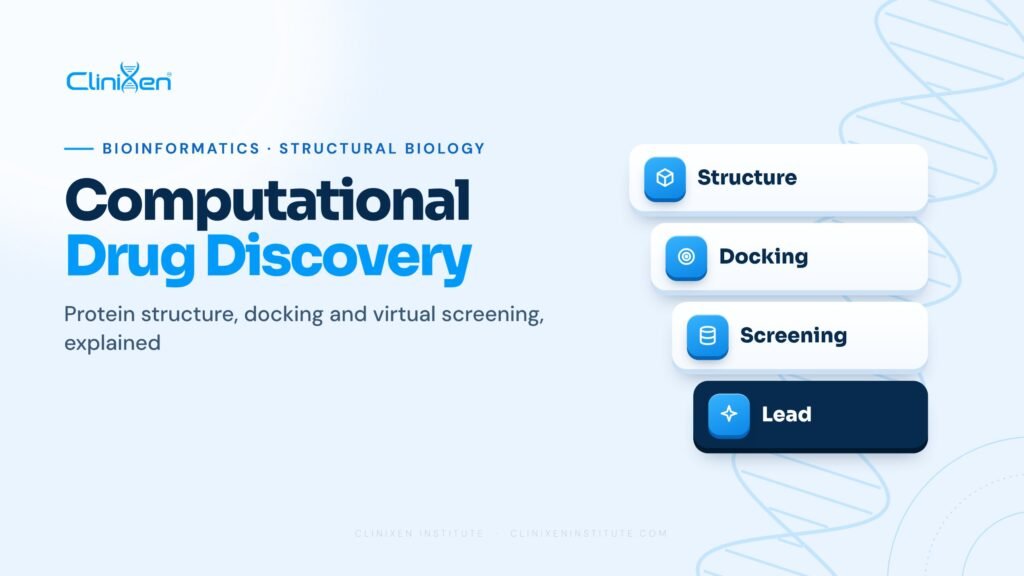
Focuses on proteins and molecules: protein structure analysis, molecular docking and virtual screening, molecular dynamics simulations and computer-aided drug design (CADD).
Bioinformatics roles explained
- Bioinformatics analyst / NGS data analyst: runs and maintains analysis pipelines and interprets results for clinical or research teams.
- Genomics data scientist: applies statistics and machine learning to large genomic datasets.
- Computational biologist / CADD scientist: models protein-ligand interactions and supports drug discovery projects.
- Research associate or project fellow: works in academic or government research labs on funded projects, often a strong first step.
- Biocurator and database specialist: curates and annotates biological data in public or company databases.
Employers include genomics and diagnostic labs, pharmaceutical and biotech R&D, CROs, research institutes and health-tech start-ups.
Skills you need
- Biology foundations: molecular biology, genetics and the central dogma, explained clearly in interviews.
- Linux command line: most bioinformatics tools run on Linux servers.
- Programming: Python and/or R for data handling, statistics and visualisation.
- Biological databases: NCBI, Ensembl, UniProt and PDB.
- Genomics tools (track 1): FastQC, alignment tools such as BWA, variant calling workflows such as GATK, and RNA-seq analysis basics.
- Structural tools (track 2): molecular visualisation, docking tools such as AutoDock Vina, and molecular dynamics with packages such as GROMACS.
- Statistics and reproducibility: documenting analyses so others can repeat them.
Who can become a bioinformatician?
Graduates and postgraduates in biotechnology, life sciences, microbiology, biochemistry, pharmacy and related fields regularly move into bioinformatics. You do not need a computer science degree, but you do need to become comfortable with coding and data. Much of the work itself is done on computers and servers, so strong coding and data skills matter more than location.
Build a portfolio that gets noticed
- Choose a track (genomics or computational biology) for your first projects.
- Download a public dataset, for example from NCBI's Sequence Read Archive or the Protein Data Bank.
- Run a complete analysis: from raw data to a clear result, figure and short write-up.
- Publish your code and report on GitHub so recruiters can see your work.
- Repeat with a second project that adds a new skill, such as RNA-seq or molecular dynamics.
Key takeaways
- India's genomics push, including the Genome India Project and IBDC, is increasing demand for bioinformatics skills.
- The field splits into genomics/NGS analysis and computational biology/drug design.
- Linux, Python or R, biological databases and domain-specific tools are the core skills.
- A small portfolio of real analyses is often more persuasive than certificates alone.
Learn bioinformatics with CliniXen
CliniXen Institute offers two mentor-led Advanced Diplomas: Bioinformatics – Specialization in Genomics & NGS Data Analysis and Bioinformatics – Specialization in Structural Biology & Computational Drug Discovery. Compare all courses.
Advanced Diploma in Bioinformatics – Specialization in Genomics & NGS Data Analysis
References
- Indian Biological Data Centre (IBDC). https://ibdc.dbtindia.gov.in/
- Department of Biotechnology, Government of India. https://dbtindia.gov.in/
- NCBI Sequence Read Archive. https://www.ncbi.nlm.nih.gov/sra
- RCSB Protein Data Bank. https://www.rcsb.org/
Disclaimer: This article is for educational purposes and reflects publicly available regulatory and scientific information at the time of writing. Guidance documents are updated periodically; always consult the latest official version.